Accuweather Winter Forecast Calls for Warmer than Normal Temperatures

Tuesday, October 23rd, 2007

Accuweather.com has released its Winter 2007-2008 forecast, and it calls for much warmer temperatures than normal for most of the country. Long range forecaster Joe Bastardi says that the beginning and end of the season will probably be closest to normal, but the period from mid-December through February could be one of the top ten warmest winter periods, with the bulk of the warmth centered over the Tennessee Valley and the Carolinas.

Bastardi also has a warning for the drought starved southeast:

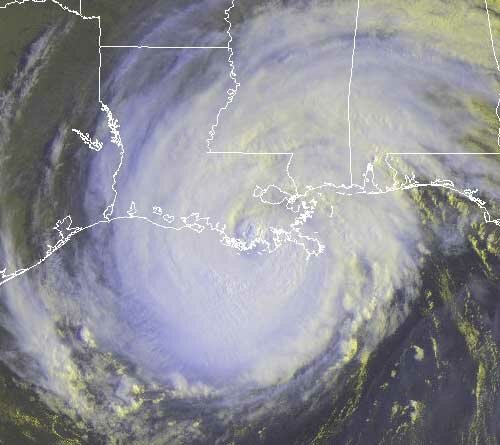
“We will know in the next three to four weeks whether a storm from the tropics might arrive to help the southeast drought situation. If that doesn’t materialize, those states are looking at a very dry winter, with precipitation amounts less than half of normal in some areas.”

A combination of La Nina conditions and warming Atlantic Ocean temperatures are the chief culprits for the warm weather. East of a line from the Great Lakes to the Southwest could see temperatures above normal 75% of the time.

Update 10/25/07 - here’s a link to a more detailed winter forecast from Accuweather.

Sphere: Related Content

Accuweather Hurricane Predictions; Global Warming News

Tuesday, May 15th, 2007

110 Degree Summer Temperatures in 2080?

You may have read the banner headline at the top of Thursday’s Atlanta Journal-Constitution — NASA Predicts Scorcher for Atlanta. The article focused on the potential for daily high summer temperatures of 110 degrees in Georgia by 2080, 15 to 20 degrees above what we typically see now. The article was based on a press release from NASA’s Goddard Space Flight Center, which in turn was based on a peer reviewed article that appeared in the American Meteorological Society’s Journal of Climate. I tried to read the original article, which unfortunately is only available to subscribers, but was able to locate the article’s abstract.

The interesting thing to me is that the focus of the research seemed to be the effects of colder sea surface temperatures on precipitation probabilities in the eastern US. While the abstract says nothing about carbon dioxide levels or global warming, it appears that the bottom line is that if CO2 levels continue to increase by 2% per year, and you get a summer with extreme low eastern Pacific sea surface temperatures, which would result in fewer storms in the eastern US, then daytime temperatures could range between 100 and 110 in cities like Atlanta.

Kirk Melhuish Weighs In on Global Warming

WSB Radio meteorologist Kirk Melhuish released a position paper this week that reflects his observations on global warming. The four page missive is well worth a read, both for his opinions on the subject, and for his command of English literature. He cautions readers to be wary of the extremists on both sides of the global warming debate, but acknowledges that there does appear to be strong evidence of some human-caused effects in the rise of temperatures.

He questions our current ability to correctly model Earth’s climate such that we can make accurate predictions about what the climate will be like 100 years from now, and thinks that it may take another 20 years before the competing scientific theories are analyzed properly to determine whether what is being predicted now is correct.

AccuWeather Releases 2007 Hurricane Projections

Hurricane expert Joe Bastardi and the weather forecasters at AccuWeather put out a press release this week with their predictions for the 2007 hurricane season. They forecast between 13 and 14 named storms, and 3 intense hurricanes category 3 or higher. While still a season with greater than normal hurricane activity, they are predicting fewer storms than Dr. Gray at Colorado State University, who is calling for 17 named storms, and 5 intense hurricanes.

AccuWeather thinks that the area most likely to be hit by hurricanes this year is the Gulf Coast, with the most danger from Cape Hatteras, North Carolina, through Florida, and west to the mouth of the Mississippi.

If the predictions hold true, it will be bad news for an area that got clobbered in 2004 and 2005. However, it could mean an end to the drought that is affecting Georgia, since there is a good likelihood that storms in the eastern Gulf end up bringing rain to Georgia. Dr. Gray will update his forecast one more time, just before the tropical season officially starts on June first.

Sphere: Related Content

Late April Weather Thoughts

Friday, April 27th, 2007

Some random weather observations as Georgia’s (lack of) April showers will bring forth May Flowers:

  • The third of an inch of rain we got on Thursday didn’t go very far to help the rain deficit we’ve had this year — about half of what we would get in a ‘normal’ year. This week, virtually all of Georgia is officially in a moderate drought, or worse, according to the Georgia Drought Monitor. The most extreme drought conditions are in the area affected by the fires in southeast Georgia.
  • Accuweather.com is saying that the United States may be facing another Dust Bowl similar to what we had in the 1930s. The idea is that strong hurricane seasons correlate with dry conditions in the Plains states. Meanwhile, another forecaster is saying he doesn’t see an end to the dry conditions in the Southeast until tropical weather comes to disrupt the prevailing weather patterns.
  • The next two weeks will probably bring warmer than normal conditions to much of the country, including Georgia. We’ll see temperatures in the mid 80s, when the normal high should be around 75 degrees.
  • Accuweather’s Joe Bastardi is predicting another busier than usual hurricane season this year. The early indications are for a return of the storms to the Gulf Coast states, and continuing possibilities for hurricanes in the Northeast.
  • I spent some time in Asheville, North Carolina this week, and if you think the Atlanta area suffered because of the Easter cold spell, you should see Asheville. Temperatures there dropped to 20 degrees Easter weekend, and most of the spring beauty one could expect to see at Biltmore Estate was wiped out. It seems that most of the trees were just beginning to send out leaves, and they all froze, giving a mid-winter look to the mountains. Viburnums, Azaleas, Wigelias — all were wiped out.
  • Lawrencevilleweather.com will be moving to a new server sometime next week. As more and more people visit the site, and with the addition of more maps and features, performance hasn’t been exactly great. The server move should make for faster page displays. It’s scheduled for Monday night, although that could change. There should only be a 15 minute disruption, and I’ll be checking things out on Tuesday morning to make sure everything’s running OK.
Sphere: Related Content

Warm Temperatures Ending Soon

Saturday, January 13th, 2007

Much of the eastern half of the country has experienced unusually warm weather so far this winter. New York City finally saw its first flakes of snow this week–the latest first snowfall ever recorded. Temperatures in North Georgia so far this month are between seven and eight degrees above normal. This weekend, the Atlanta area could see temperatures around 70 degrees. Newspapers have run articles lamenting poor sales of winter coats and snow blowers.

If you’re thinking that it’s time to sharpen your lawnmower blades and get out the gardening gloves, you would most likely be wrong.

The split-flow upper air pattern that has been keeping the cold air up in Canada has begun to change, and at least one prominent meteorologist thinks that we could be seeing one of the coldest 30 day periods in the last 50 years.

Accuweather put out a press release on Monday featuring comments from forecaster Joe Bastardi. Bastardi says “the mild weather we’re experiencing now will be a distant memory,” and notes cold air will be moving across the country the week of the 15th, and a cold weather pattern will dominate the second half of the month.

The central part of the country is seeing this change now, and they are going to have a long slog this weekend. A slow-moving front stretches from East Texas to Maine, and is the dividing line between cold and warm air. It’s also bringing a lot of precipitation, as snow in the north and west, and as rain in areas stretching from Louisiana through southern Ohio. In between there’s going to be a major ice storm stretching from the Texas-Oklahoma panhandle through parts of Illinois, Indiana and Ohio. Once all of this moves through by the middle of next week, the cold air will settle in.

Georgia is likely to miss all the weather excitement, at least through Monday evening. By that time, we may see some rain as the front exits the area, and the real cold air will stay out of the way for a few more days. But, by the week of the 22nd, we could see highs only in the mid 40s, and lows in the low 20s; much colder than normal.

Sphere: Related Content

Accuweather releases first look at winter forecast

Tuesday, September 19th, 2006

Although winter outlooks typically don’t arrive until mid-October, Accuweather has released a preliminary look at the likely weather for Winter 2006-2007. Not surprisingly, the forecast is pretty typical of what you would expect for an El Nino year.

Meteorologist Joe Bastardi of Accuweather says that the weather along the east coast will likely be stormier than normal — typical of El Nino years. Bastardi predicts a relatively mild start to the season in the Northeast, followed by cooler weather in January and February. Whether this will lead to a greater chance of snowfall is really a matter of timing, since the cold Arctic air must be in place at the same time the storms are.

In the west, Bastardi says the weather is likely to be dryer than normal due to an extended high pressure system, and warmer than normal as well.

None of this is particularly earth-shaking, but again these are September predictions, three to five months out. Look for more specific Winter outlooks to be issued next month by all the major forecasters.

Taking a look at the weather in the short term, though, the cold front passed through the Atlanta area this afternoon, dropping dewpoints by 15 degrees between 2 and 6 PM as the storms cleared out. Behind the front is a taste of fall, with temperatures dropping into the 50s, and highs for the next few days not breaking 80. We may be getting into one of those annoying patterns where bad weather arrives just in time for the weekend for the next few weeks, with long range forecasts calling for a chance of rain this weekend, and again at the end of the month.

Sphere: Related Content